Wednesday, September 12, 2018

CLASSIFICATIONS OF HYPERBARIC CHAMBERS AS MEDICAL DEVICES

Image result for fda logo

A: FDA Classification of Hyperbaric Chambers : 


The definition of a Medical device is given in the FD&C Act, and it includes products from the simple toothbrush to complex devices such as implantable neurostimulators. Including Medical Devices and Non Medical Devices

FDA , Food and Drug Administration USA has a separate Section that Classifies the Medical Devices and Hyperbaric Chamber is a Genuine Medical Device and this is done by Subsidiary of called CDRH , The Center for Devices and Radiological Health (CDRH) .. Which  is the branch of the FDA responsible for the pre-market approval of all medical devices, as well as overseeing the , manufacturing, performance and safety of these devices.

Image result for CDRH

CDRH also oversees the safety performance of non-medical devices that emit certain types of electromagneticradiation. Examples of CDRH-regulated devices include cellular phones, airport baggage screening equipment, television receivers, microwave ovens, tanning booths, and laser products.

The Food and Drug Administration (FDA) has established classifications for approximately 1,700 different generic types of devices and grouped them into 16 medical specialties referred to as panels. Each of these generic types of devices is assigned to one of three regulatory classes based on the level of control necessary to assure the safety and effectiveness of the device, based on Device Class and Regulatory Controls :

The 3 three classes and the requirements which apply to them are: 

1. Class I :

With General Controls, Mostly Do not require Controls

2. Class II :

Special Controls With Exemptions or Without Exemptions Requiring 510K required , If your device is classified as Class I or II, and if it is not exempt, a 510k will be required for marketing. All devices classified as exempt are subject to the limitations on exemptions. Limitations of device exemptions are covered under 21 CFR xxx.9, where xxx refers to Parts 862-892.

3. Class III :

General Controls and Requiring Pre-market Approval , For Class III devices, a Pre-market approval application (PMA) will be required unless your device is a Pre-amendments device (on the market prior to the passage of the medical device amendments in 1976, or substantially equivalent to such a device) The class to which your device is assigned determines, among other things, the type of Pre-marketing submission/application required for FDA clearance to market.

Hyperbaric Chamber is Classified as Class 2 by FDA . 


B : NFPA  National Fire Protection Association USA :


The National Fire Protection Association (NFPA) is a United States trade association, albeit with some international members, that creates and maintains private, copyrighted standards and codes for usage and adoption by local governments. The association was formed in 1896 by a group of insurance firms.

NFPA , Grades the Chambers into following Categories :

A: Mono Chambers

B: Multi-places Chambers

C: Special Chambers like used for Veterinary Purposes


KSYBIZ HYPERBARIC CHANNEL 


Please Subscribe to my You Tube " KSYBIZ"  Hyperbaric  Channel to highly Informative Videos and to encourage our Hard Work .

And For Any Question You can contact me below on the Social Media Apps shown on the floating Bar at the bottom.

Bye and take care and see you soon,

Thanking you in Anticipation,


From,


Dr. Khurrum Shaukat Yousafzai
Director Chinar Trust Hospital,
Director Ksy Hyperbarics Consultancy,
Founder Hyperbaric Medical Society Pakistan,
Twitter: ksybiz
We Chat :ksybiz
LinkedIn: ksybiz
YouTube: ksybiz
Skype: Dr Khurrum Shaukat
Web: ksybiz.wixsite.com/hbot
Blogsite: ksybiz.blogspot.com
Facebook: facebook.com/hbotpk
Mobile / Whatsapp: +92 343 2 333 555

Tuesday, August 14, 2018

HOW TO OPERATE & ASSEMBLE HOME USE PORTABLE HYPERBARIC CHAMBERS


by

Dr Khurrum Shaukat Yusafzai ,
Hyperbaric Medical Consultant.

1. How to Operate Home Use Hyperbaric Chamber:  


Here is a video on How to Operate Home use Hyperbaric Chamber : 


Click to Watch Video : https://youtu.be/jgO_2OH_p3c


2. How to Assemble and Use Hyperbaric Chambers:  

Here is a video on How to Assemble and Use Hyperbaric Chamber at your Home . 


Click to Watch Video : https://youtu.be/NsyktCG3yjk


3 . FEATURES OF HOME USE HYPERBARIC CHAMBERS 


For those living in other Cities Buying a Home use Hyperbaric Chambers is only Option Available to get Treatment 

Dr Khurram Shaukat Yusufzai has Founded  KSY Hyperbarics to help the people of Pakistan as Hyperbaric Chambers is not Available in Every City in Pakistan . 

As many Companies Manufacture the Hyperbaric Chambers in all over the world , But they differ in many Aspects and Specifications also the Gas used to compress is different & can be : 

a. Oxygen compression 
b. Air Compression 

They Differ in Pressures Gradients as well 

a. 1.3 ATA sytems  
b. 1.5 ATA systems 
c. 2 to 3 to 4 ATA sytems 

The method of Delivery of oxygen to Patients also Differ like 

1. Cylinder feed system 
b. Oxygen Generator / Concentrator 

Climate Control System like 

1. De- Humidifier 
b. AC system 
c.  Without Any Climate Control 

and so Many other Aspects as well like

a. Lying Type while sleeping 
b. Sitting Type 
b. Wheel Chair Type 
c. Room like for Multiple Person's inside a Portable Muliple chamber 

The Advice of a Consultant Hyperbaric Medical Specialist is very Important to get an Ideal and Good Hyperbaric Chamber, that suits your Budget and also your Disease as well .

 KSY Hyperbarics has the Expertise and the Experience to do that .


Portable Home use Hyperbaric chambers are used by People in their Homes because of Light Weight, Portable easy to carry when Travelling,

Easy to use like Switch on and off of a Button, 

Operating Pressures is Mild and Easy to Tolerate around 1.3 to 1.5 ATA Atmosphere Pressure

Best source & Choice of treatment for :

1. Patients not near the Hospital Based Hyperbaric chambers Best Choice who cannot Travel Daily to Hospital 

2. For Immobile  Bed Ridden & Disable patients who cannot go to hospital every day. 

3. Needing prolong treatment like 6 month to 1 year or  for more than 30 to 60 Sessions 

4. Cheapest option among All. Best Option for those having Chronic Diseases and Require Hyperbaric Medicine Chamber this is Cheapest Cost Wise to run .

5. Convenient as at home and Taken Easily like switch on and off and makes it own oxygen. 

6. Has been used in Mountaineering Pakistan Army Defense Forces uses  for HAPE, High Altitude Pulmonary Edema and HACE , High Altitude Cerebral Edema It is also used by Adventurers and Mountaineers Climbing K2 and Tall Mountains of Pakhtunkhwa , Northern Areas of Pakistan , Click here to Know More 

7. Extensively used for Sports Medicine and Professional Athletes and Enhanced Performance Sports Players and Cricketers.

8. For Anti Ageing & Reverse Ageing and Beauty conscious super Stars Click here to Know More 

9. For Health and Vitality & Increasing Immunity

10. For 300 disease that has no solution in other specialities Click Here to know more 


Delivery time after Payment: 


Working Time 7-10  Working days To Nearest Airport  of addresses of Customer by Air or Sea, after Payment in Bank Account. 

Customer will be provided with Invoice with All these exact details and Account numbers to Transfer money to Factory Bank account Directly of Hyperbaric chamber Manufacturer with peace of mind and security. 


Since chambers are Portable & Flexible & have small Packing & can be sent via International Air Courier to anywhere in the world 

A Tracking Number is allotted by the Factory & International Air Courier , Buyer can track the Chamber via the Internet

There would be no middle man or Distributor to keep the cost low. 

1 Year warranty will be provided from Date of Purchase of Hyperbaric chamber

Included  in price is also charges of Delivery to your address on invoice 


Customs :  


The customs charges are responsibility of the buyer and also the manufacturer will ensure the tracking and transport to Nearest Airport in Pakistan

HS Code for Hyperbaric Chamber  : 9019.1000  

Custom Duty : 3% 
FED : 13-15% 
Sales Tax: 17% 
Total :  33-35% of the Invoice Price 


FDA Food and Drug Administration USA Classification: 


The Portable and Flexible Hyperbaric Chambers are Classified in North America by FDA and NFPA, that is Food and Drug Authority and National Fire Protection Agency 

In Europe by the European commission Standards CE , and the whole World follows this classification of Medical Equipment. 

FDA USA Classification  :  Class 2 Chamber
NFPA USA                     :  Class A ( Mono Chambers )

Hence it is Class 2 A Product, as Flexible chambers and shares the Category with Mono Hard Chambers as well.


1.3 ATA mHBOT & 1.5 ATA HBOT PROS AND CONS : 


Portable Flexible Hyperbaric Chambers and Solid Hyperbaric Chambers  are both Approved by FDA and European Commission CE

In American and Europeans Continent Portable and Flexible Hyperbaric Chambers has been limited and Restricted the Use to only 1.3 ATA only as mHBOT 

In other Places and Continents 1.5 ATA HBOT chamber can be provided 

TO KNOW PROS AND CONS OF 1.3 VS 1.5 AT HOME USE CHAMBER CLICK HERE 


4. HOW TO GET HOME USE HYPERBARIC CHAMBER AND PRESCRIPTION FOR TREATMENT : 


In Order to get Hyperbaric Treatment Prescription and Referral For use at Home it is Advised to get a consultations from Hyperbaric Doctor/Specialist

Hyperbaric Doctor/Specialist can Write the Prescription and also Adjust the Pressure and Duration of Treatment for each and every Specific Disease , for a affordable fee he can write a document with all instructions you need.

Only Hyperbaric Doctor/Specialist can Advise on day to day Matters of Hyperbaric medical treatment and rest of Medical Doctors & specialist have no idea about this Speciality and it's working and most of them are ignorant about its working as matter of Fact.

Problems when undergoing Hyperbaric Medical Treatment & to l Avoid any Complications while under Going Treatment.

Pakistan as 5th Largest country in world in population & Market lacks Hyperbaric chambers available to general Public & Huge market exist & is Available, to Install Hyperbaric Chambers in Pakistan in Hospitals and the Clinics or Homes.

To Order the Home use Hyperbaric Chamber & For Prescription & Installation of Chamber at your Clinic or Hospital or home please contact Hyperbaric Doctor/Specialist :


Web : ksybiz.wixsite.com/hbot
What's App : +92 343 23335555.


5 . WHAT DISEASES TREATED BY HYPERBARIC MEDICINE 

To Know What Disease are Treated by Hyperbaric Medicine Please CLICK HERE


KSYBIZ HYPERBARIC CHANNEL 


Please Subscribe to my " KSYBIZ " Hyperbaric Channel to highly Informative Videos About Hyperbaric medicine

And For Any Question You can contact me below on the Social Media Apps shown on the floating Bar at the bottom.

Bye and take care and see you soon,

Thanking you in Anticipation,


From,


Dr. Khurrum Shaukat Yousafzai
Director Chinar Trust Hospital,
Director Ksy Hyperbarics Consultancy,
Founder Hyperbaric Medical Society Pakistan,
Twitter: ksybiz
We Chat :ksybiz
LinkedIn: ksybiz
YouTube: ksybiz
Skype: Dr Khurrum Shaukat
Web: ksybiz.wixsite.com/hbot
Blogsite: ksybiz.blogspot.com
Facebook: facebook.com/hbotpk
Mobile / Whatsapp: +92 343 2 333 555


Wednesday, April 25, 2018

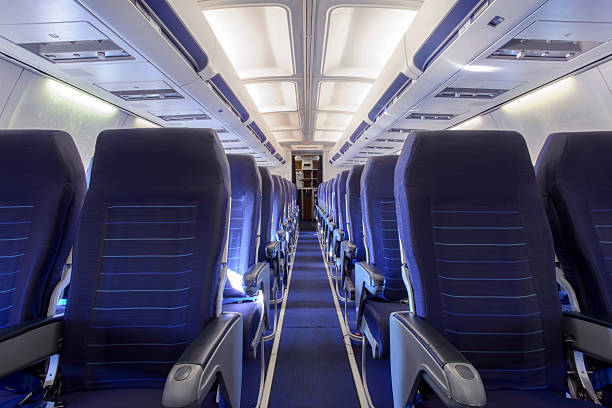
HYPERBARIC MEDICINE FOR JET LAG & AIRLINE TRAVEL RELATED PROBLEMS


Image result for Aircraft inside


1. AIRLINE TRAVEL & PRESSURIZED CABINS 


Although aircraft cabins are pressurised, cabin air pressure at cruising altitude is lower than air pressure at sea level. At typical cruising altitudes in the range 11 000–12 200 m (36 000–40 000 feet), air pressure in the cabin is equivalent to the outside air pressure at 1800–2400 m (6000–8000 feet) above sea level. As a consequence, less oxygen is taken up by the blood (hypoxia) and gases within the body expand. The effects of reduced cabin air pressure are usually well tolerated by healthy passengers.
Oxygen and hypoxia

Cabin air contains ample oxygen for healthy passengers and crew. However, because cabin air pressure is relatively low, the amount of oxygen carried in the blood is reduced compared with that at sea level. Passengers with certain medical conditions, particularly heart and lung diseases and blood disorders such as anaemia (in particular sickle-cell anaemia), may not tolerate this reduced oxygen level (hypoxia) very well. Some of these passengers are able to travel safely if arrangements are made with the airline for the provision of an additional oxygen supply during flight. However, because regulations and practices differ from country to country and between airlines, it is strongly recommended that these travellers, especially those wishing to carry their own oxygen, contact the airline early in their travel plans. An additional charge is often levied on passengers who require supplemental oxygen to be provided by the airline.

Gas expansion

As the aircraft climbs in altitude after take-off, the decreasing cabin air pressure causes gases to expand. Similarly, as the aircraft descends in altitude before landing, the increasing pressure in the cabin causes gases to contract. These changes may have effects where air is trapped in the body.
Passengers often experience a “popping” sensation in the ears caused by air escaping from the middle ear and the sinuses during the aircraft’s climb. This is not usually considered a problem. As the aircraft descends in altitude prior to landing, air must flow back into the middle ear and sinuses in order to equalize pressure. If this does not happen, the ears or sinuses may feel as if they are blocked and pain can result. Swallowing, chewing or yawning (“clearing the ears”) will usually relieve any discomfort. As soon as it is recognized that the problem will not resolve itself using these methods, a short forceful expiration against a pinched nose and closed mouth (Valsalva manoeuvre) should be tried and will usually help. For infants, feeding or giving a pacifier (dummy) to stimulate swallowing may reduce the symptoms.

Individuals with ear, nose and sinus infections should avoid flying because pain and injury may result from the inability to equalise pressure differences. If travel cannot be avoided, the use of decongestant nasal drops shortly before the flight and again before descent may be helpful.

As the aircraft climbs, expansion of gas in the abdomen can cause discomfort, although this is usually mild.

Some forms of surgery (e.g. abdominal surgery) and other medical treatments or tests (e.g. treatment for a detached retina) may introduce air or other gases into a body cavity. Travellers who have recently undergone such procedures should ask a travel medicine physician or their treating physician how long they should wait before undertaking air travel

In flight Air Pressure

Airplane cabins are pressurised so that when you’re at cruising altitude (36,000 to 40,000 feet), the air pressure in the cabin is equal to about what you’d experience at 6,000 to 8,000 feet above sea level. The reduced air pressure means the amount of oxygen in your blood is lower than it would be at sea level.
If you’ve ever spent time at high altitudes, you’re likely familiar with the fatigue, headaches, and insomnia that come with reduced oxygen. Add this to the dehydration of air travel and the challenge of shifting time zones and it begins to make sense why jet lag is such a beast.


2. HYPERBARIC MEDICINE FOR JET LAG & AIRLINE TRAVEL RELATED PROBLEMS:


While air-plane cabin air pressure is lower than sea-level air pressure, air pressure inside the hyperbaric oxygen chamber is higher—by two to three times. Mild hyperbaric oxygen chamber treatment, or mHBOT, involves breathing pure oxygen in a pressurised tube, allowing your lungs to gather more oxygen than it gets from breathing pure oxygen at regular air pressure. This helps your blood deliver more oxygen to your organs and tissues, and can help, according to Mayo Clinic, “fight bacteria and stimulate the release of substances called growth factors and stem cells, which promote healing.”

As the trend of mHBOT grows, so do concerns about it being sold as an off-label miracle cure for conditions ranging from autism to cancer. That said, it’s been successfully used for many years by college and pro athletes, who use the method to recover from workouts, heal from injuries faster, and reduce the effects of jet lag while traveling between games.

The Process:

Receiving mild hyperbaric oxygen treatment requires a prescription. In my phone consultation with the doctor (the treatment clinic referred me to a doctor who did a phone consultation) we discussed mHBOT. I wanted to use it right after landing after my return flight home for both jet lag and muscle soreness, since I was anticipating—correctly—muscle pain from a trip spent cycling, kayaking, and hiking.

The Hyperbaric Oxygen Treatment Experience

After an 11-hour flight, I went home, had a light meal and a quick shower, and then headed to a clinic called Holistic Hyperbarics for a 90-minute session.

I am mildly claustrophobic, so I had some concerns about being in the hyperbaric chamber. But Alex Williams, who runs the clinic (who I know and who offered me the treatment), calmly talked me through the process and then helped me get comfortable and oriented inside the chamber. While it wasn’t big, it was roomy enough that I could prop myself up on my elbows inside and still have a bit of headspace. The chamber was outfitted with a little window, a comfortable mat for resting on, pillows for my head and under my knees, a remote-control fan and light, and a soft blanket (everything is cleaned and sanitized for each patient).

The first few minutes were spent chewing gum and popping my ears as the chamber pressurized. Once the pressure in my ears equalized, I got more comfortable. After a 16-hour travel day, it was easy to fall asleep, and I slept deeply for the length of the treatment. When I woke up, it was time to depressurize, a process that lasted about 10 minutes and allowed my body to readjust to the exterior air pressure. After I exited the chamber, I had the juice and vitamins offered as part of the treatment package, and then headed home.

Jet Lag Recovery Time: 

I spent the next week monitoring the jet lag differences between myself and my husband, who had traveled with me but who stayed home to watch the kids while I underwent the mHBOT session. For the first day, we were both feeling pretty rough—exhausted at the wrong time of day and headachy. But I immediately started sleeping through the night, while he was plagued by 3 a.m. 
wakeups. 

About three days post-travel, I felt almost normal again, while he continued to feel the ill-effects of jet lag for more than a week. And while we’re different people with different reactions to jet lag, I did feel like my recovery time was faster than it has been on recent trips with the same time-zone change.

Would I do it again? Yes. Jet lag is terrible, and while the treatment didn’t erase it entirely, I did bounce back significantly faster than my control subject, who, after 10 days, is still falling asleep at 8 p.m. most nights.


Reference : 

1. http://www.who.int/ith/mode_of_travel/cab/en/

2.  https://www.smartertravel.com/2017/09/01/mild-hyperbaric-oxygen-treatment-jet-lag/


Thanking in Anticipation ,
Sincerely,

From,

Dr. Khurrum Shaukat Yousafzai
Director Ksy Hyperbarics Consultancy,
Founder Hyperbaric Medical Society Pakistan,
Twitter: ksybiz
We Chat :ksybiz
LinkedIn: ksybiz
YouTube: ksybiz
Skype: Dr Khurrum Shaukat
Web: ksybiz.wixsite.com/hbot
Blogsite: ksybiz.blogspot.com
Facebook: facebook.com/hbotpk
Mobile / Whatsapp: +92 343 2 333 555

Tuesday, March 27, 2018

CROSSING THE 16 MINUTE BARRIER IN RESUSCITATION IN SUDDEN DEATH


High-dose HBO2 Therapy Extends Survival Window After Cardiopulmonary Arrest, Study Suggests

Science Daily (July 16, 2008) — A ground-breaking study by researchers at the School of Medicine at LSU Health Sciences Center New Orleans published in the August 2008 issue of Resuscitation has major implications for the #1 cause of death of Americans -- sudden cardiac arrest.

The researchers stopped the heart of laboratory swine kept at room temperature, declared them dead from cardiac arrest, waited 25 minutes, and then resuscitated them with high doses of oxygen using hyperbaric oxygen therapy. The American Heart Association statistics on sudden death have shown that if a patient's heart is not restarted within 16 minutes with CPR, medications, and electric shocks, 100% of patients die.

"To resuscitate any living organism after 25 minutes of heart stoppage at room temperature has never been reported and suggests that the time to successful resuscitation in humans may be extended beyond the stubborn figure of 16 minutes that has stood for 50 years," notes Dr. Keith Van Meter, Clinical Professor of Medicine and Chief of the Section of Emergency Medicine at LSU Health Sciences Center New Orleans, who led the study.

The study involved the use of three groups of laboratory swine. All swine underwent cardiac arrest for 25 minutes during which time they received no artificial breathing, CPR, medications, or electric shocks. After 25 minutes the swine were randomly divided into 3 groups. The first group remained at normal pressure. The second group was given standard-dose hyperbaric oxygen, and the third group was given high-dose hyperbaric oxygen, a dose that is nearly 1/3 more than the highest dose currently given to humans.

Advanced cardiac life support (ACLS) was started on animals in all groups for a two-hour resuscitation period. After the two-hour resuscitation period, four of the six animals in the high-dose hyperbaric oxygen group could be resuscitated. None of the subjects in the other groups were able to be resuscitated.

"The present study shows that short-term high-dose hyperbaric oxygen is an effective resuscitation tool and is safe in a small multiplace hyperbaric chamber," concludes Dr. Van Meter. "A rehearsed team can easily load a patient in cardiopulmonary arrest into a small multiplace chamber in the pre-hospital or hospital setting without interrupting CPR or advanced cardiac life support. Successful resuscitation at 25 minutes suggests that if high dose hyperbaric oxygen is used at the current ACLS limit of 16 minutes, a greater survival may be achieved in humans and allow application of more definitive treatment such as clot dissolving drugs."

The research team also included LSU Health Sciences Center New Orleans faculty Diana Barratt, MD, MPH, Heather Murphy-Lavoie, MD, Paul G. Harch, MD, James Moises, MD, and Nicolas Bazan, MD, PhD